
Will hybrid energy projects soon become mandatory?
The revised EEG regulations on the construction of grid connections from January 2025, the innovation tender from September 2025 that was oversubscribed fourfold, the February 2026 issue of PV Magazine titled “Co-location & Hybrid PPAs,” or the transmission system operators’ maturity assessment methodology from April 2026—it appears that the industry is increasingly focusing on hybrid energy projects.
The revised EEG regulations on the construction of grid connections from January 2025, the innovation tender from September 2025 that was oversubscribed fourfold, the February 2026 issue of PV Magazine titled “Co-location & Hybrid PPAs,” or the transmission system operators’ maturity assessment methodology from April 2026 - it appears that the industry is increasingly focusing on hybrid energy projects.
What is hybridization?
A hybrid project in the electricity sector combines at least two generation, storage, or procurement technologies at a single grid interconnection point (GIP), for example:
- Solar + Wind: The different generation profiles of solar and wind complement each other.
- Solar + Wind + Storage: Storage shifts peak generation from solar or wind to periods when electricity prices are higher.
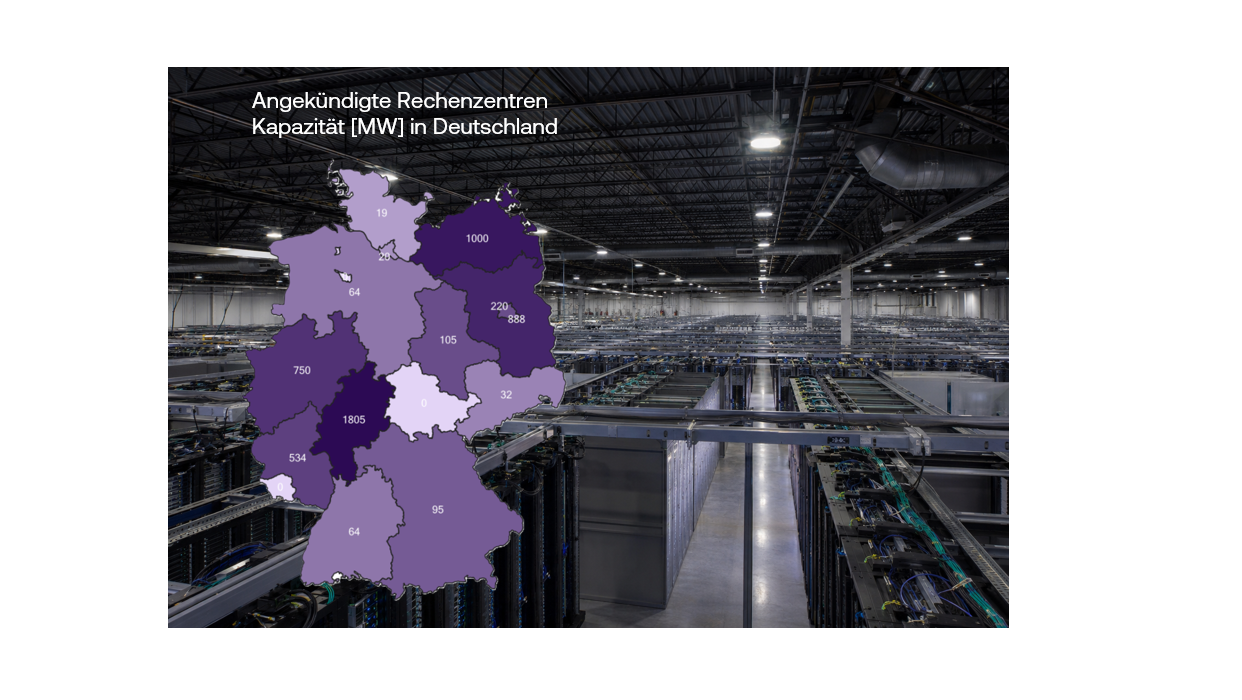
- Data Center + Storage: Storage buffers peak load hours, enabling a continuous load profile.
- Solar + Wind + Data Center + Storage: Storage balances out differences in generation and load.
The legal basis for shared grid connection is provided by Section 8a of the EEG 2023 (“CablePooling”), which has been in effect since February 2025: Multiple facilities can share an existing high-voltage transmission line - even if their combined capacity exceeds the line’s capacity. (See the dvlp blog post)
What are the main advantages of hybrid projects?
- Smaller, more efficiently utilized grid connections: Grid connections are the bottleneck for new energy projects and often the most expensive component. On average, however, a solar or wind farm feeds into the grid at full capacity for only a few hours a day. A shared NVP significantly increases the utilization of the connection - without proportionally higher connection costs. Combining generation with storage and/or procurement facilities can even significantly reduce the required grid connection capacity compared to individual facilities, thereby lowering project costs. This is one reason why, in the recently launched maturity assessment process for NVP projects at the transmission level, hybridization accounts for 10–20% of the total score.
- More stable, higher revenues: A balanced mix of wind and solar up to 150% (e.g., 75 MW solar, 75 MW wind, 100 MW NVP) results in no significant loss of revenue compared to standalone plants. The same applies to a mix of up to 125% of solar parks with storage (e.g., 100 MW solar, 25 MW storage, 100 MW NVP). Rather, storage systems primarily shift solar park generation to hours with higher revenue potential and simultaneously provide system services (e.g., balancing energy), which increases and diversifies revenue streams. The combination of wind and solar also results in a significantly more consistent annual and daily output profile - which can lead to higher and more stable revenues in both Power Purchase Agreements (PPAs) and spot market trading.
Could hybridization soon become mandatory?
There is currently no regulatory requirement for this. Rather, it is the need to optimize scarce grid connection quotas and to increase and diversify revenue in an increasingly challenging economic environment that is effectively driving hybridization. In short: It makes sense from both a grid and an economic perspective! One could therefore argue that, with grid-connected power sources becoming increasingly scarce and the growing cannibalization of renewables, hybrid projects are becoming a necessity not because of regulation, but for economic reasons.
How do I plan a hybrid project?
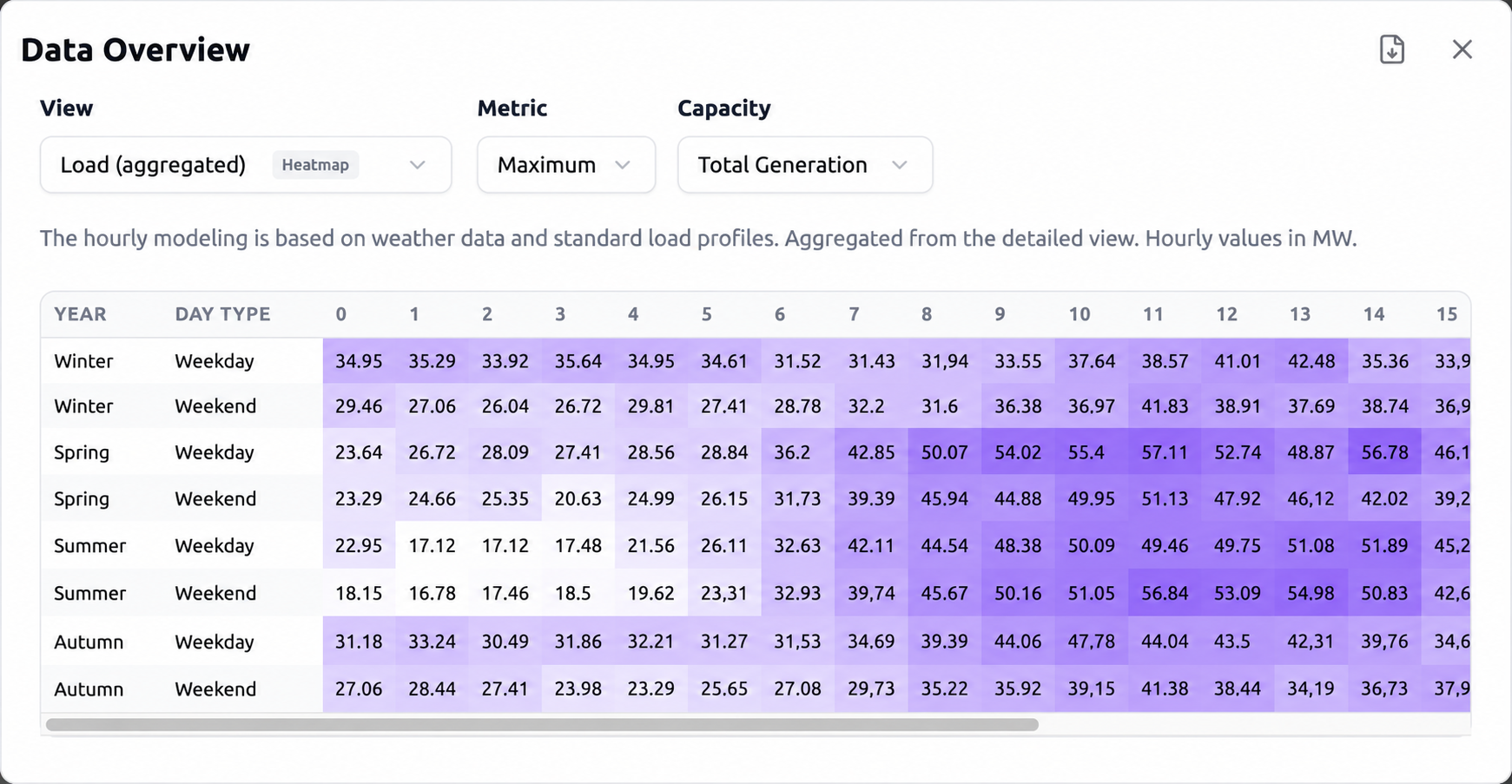
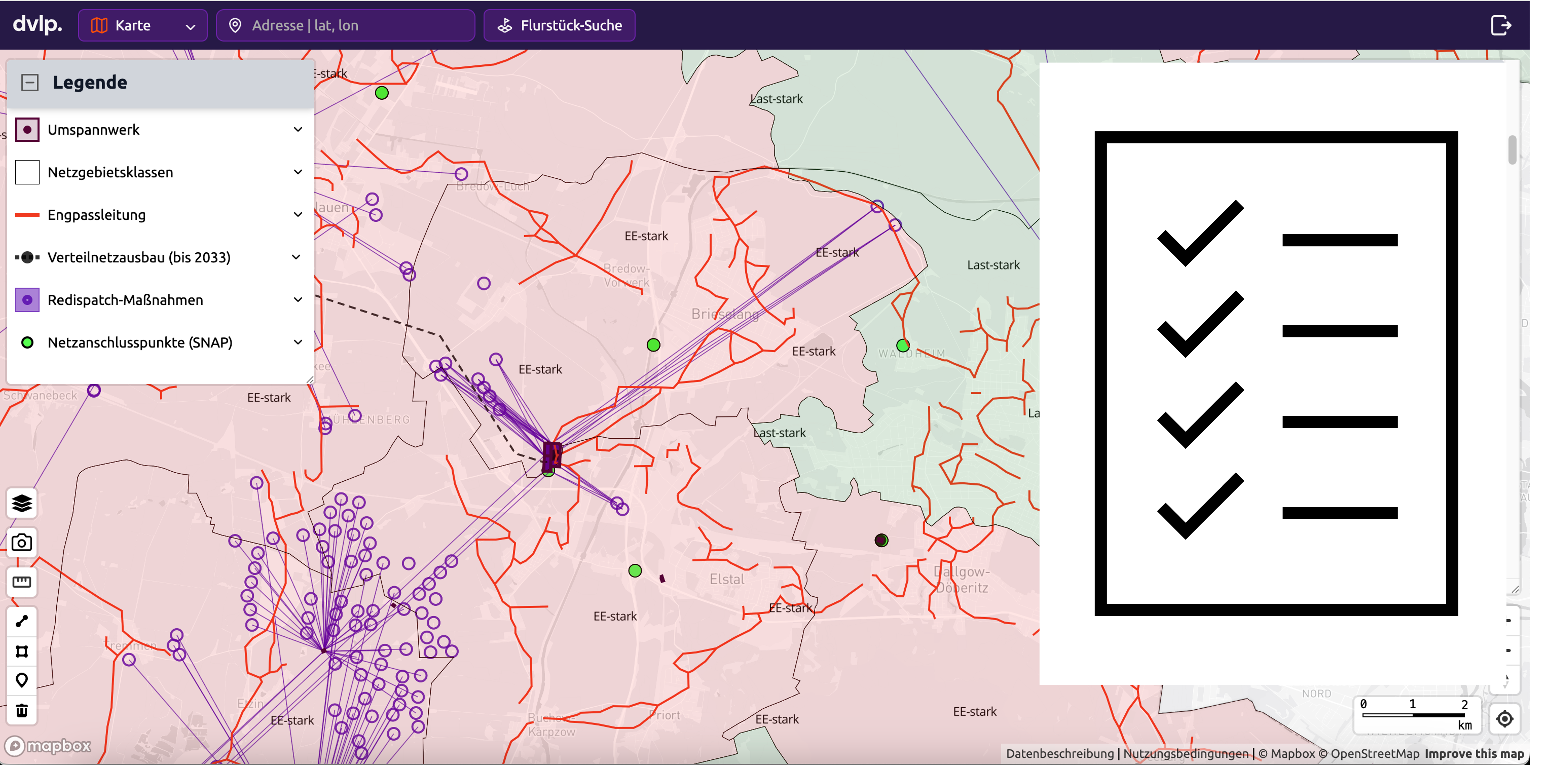
1. Identifying potential: To understand how fully utilized potential grid-connected power plants (GCPs) are and which combinations of technologies make optimal use of available capacity, the hourly utilization of these GCPs must be modeled. For example, the dvlp web-GIS displays the hourly utilization of all substations in Germany based on the already-connected plants and their hourly generation profiles - across the entire year. This can serve as a basis for optimally configuring hybrid projects and/or proactively proposing flexible connection agreements.
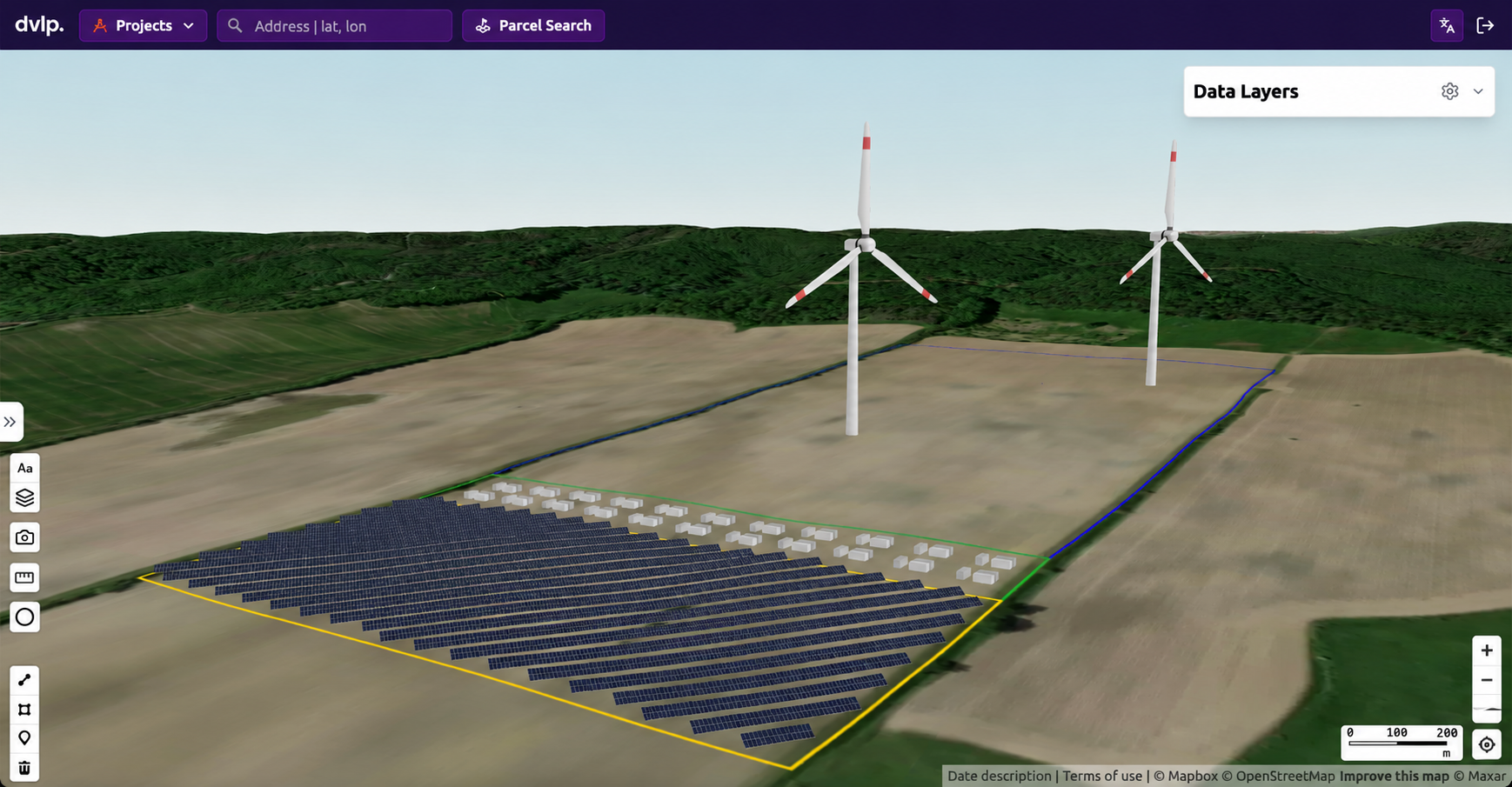
2. Projekt planen: Um zu verstehen, welche Flächen geeignet sind und wieviel Platz/Kapazität für jede Technologie zur Verfügung steht, muss eine detaillierte Restriktionsanalyse im Umkreis des NVP durchgeführt werden. Dazu enthält das dvlp web-GIS alle relevanten Daten und die Option eine Restriktionsanalyse automatisiert durchzuführen. Neuerdings können hybride Energieprojekt auch in 3D visualisiert werden, um das Projekt auch für Flächeneigentümer und Gemeinderäte greifbar zu machen.
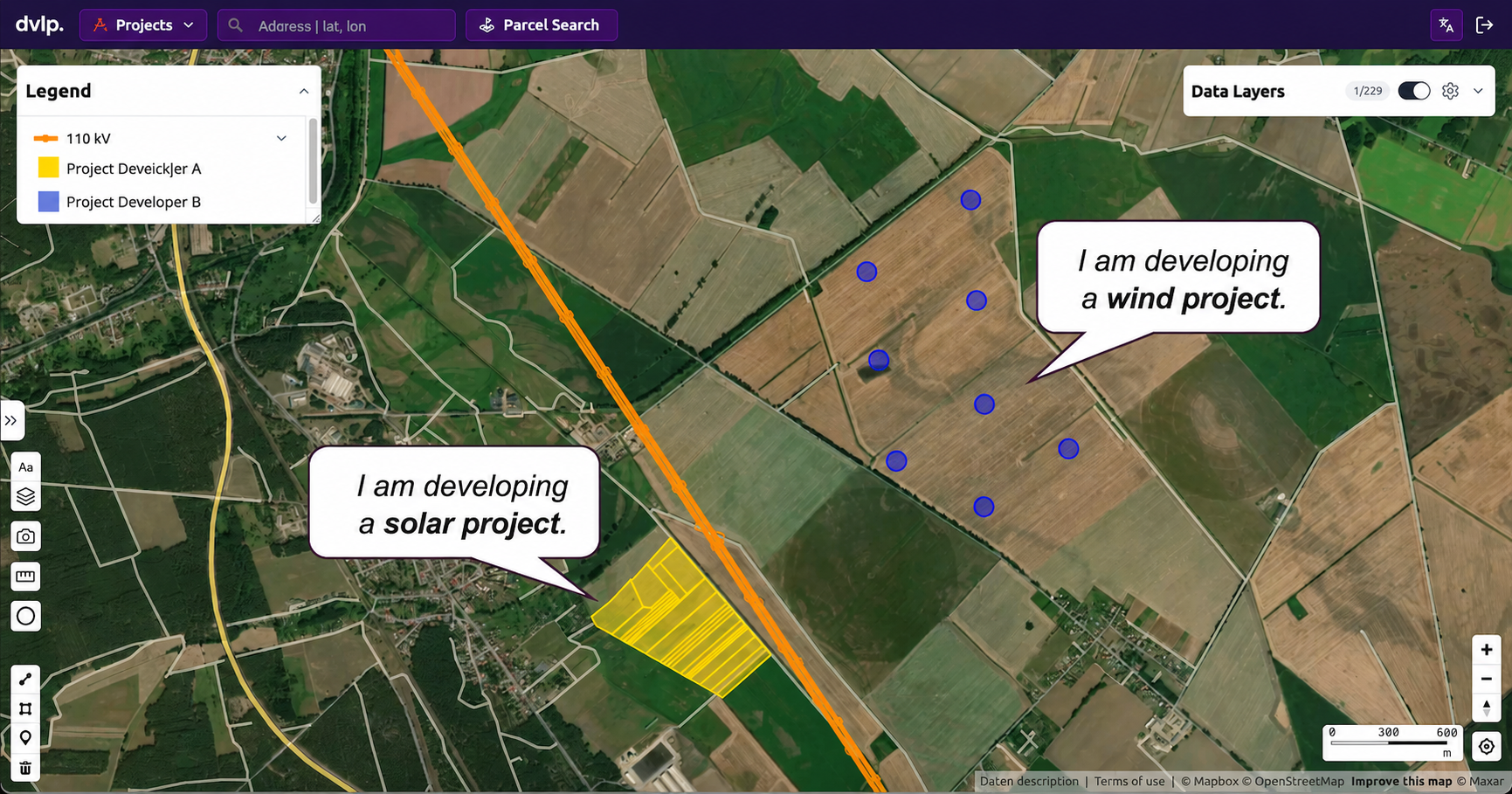
3. Finding partners: In reality, hybrid projects are not always planned by a single entity, as the expertise required and the time needed to develop solar/wind/battery parks or data centers vary. To determine whether collaboration with partners is possible, you need to know if other developers are active near your own project. This is made possible by the GridConnect feature in the dvlp web GIS, which can also be used to specifically contact potential partner developers afterward.
With that, nothing stands in the way of developing hybrid energy projects!
More blog posts
Request a demo now

