
Redispatch Curtailment Reserve: Which Wind Priority Areas Are at Risk?
87 legally binding and 231 proposed, as-yet-undeveloped priority areas for wind energy in Bavaria could potentially be affected by the planned redispatch reservation (RDV). What this means for site selection and the planning of new wind farms.
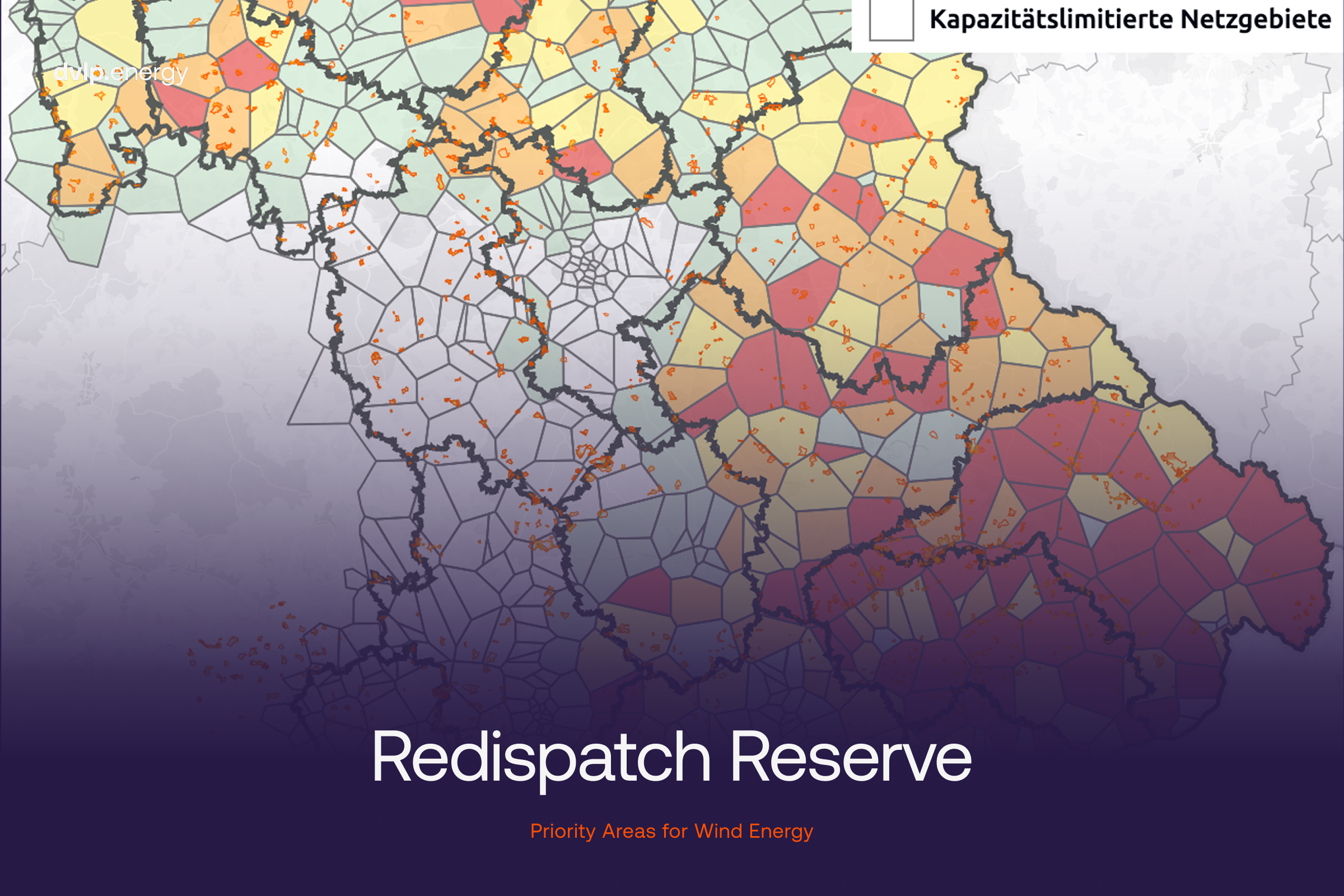
Redispatch reservation: Which wind priority areas could be at risk?
Published on 30 July 2026 · Updated on 15 September 2026
On 29 July 2026, the German Federal Cabinet approved the draft grid connection package. Under the proposal, distribution system operators would be authorised to designate grid areas particularly affected by curtailment as “capacity-limited grid areas”. This designation would be technology-specific. According to the current draft, electricity generation from the respective technology must have been curtailed by more than 5% in the preceding calendar year.
For new installations of the affected technology, the entitlement to financial compensation for redispatch in these areas would be partially restricted. Under this proposed “redispatch reservation” (Redispatch-Vorbehalt, RDV), the uncompensated share would be capped at 20% of annual electricity generation, or 18% in wind energy areas designated under Germany’s Wind Energy Area Requirements Act (WindBG). The draft is still undergoing the legislative process.
We already analysed in February which regions could be affected by the original proposal. Following the Cabinet’s approval, we updated the analysis to reflect the new threshold of more than 5%.
The grid package is now moving into parliamentary deliberations: according to the current agenda, the first reading in the Bundestag is scheduled for 24 September 2026. The draft has therefore not yet been adopted into law.
Background: A hundred planning regions, thousands of wind priority areas
Germany has 102 planning regions. Their regional spatial plans govern land use and must be taken into account when planning new wind or solar farms. Of these regions, 78 have legally designated priority areas for wind energy, while 68 have published drafts proposing further areas. Nationwide, this amounts to around 4,000 wind priority areas in force and around 7,300 in draft plans.
The key question for project developers is: which of these areas remain undeveloped — and which lie within grid areas that could be designated as capacity-limited for wind energy? Developing new wind farms in those locations could involve additional economic risk if the grid connection package passes through Parliament in its current form.
Data availability: Redispatch data remain difficult to access
Unfortunately, only a few grid operators publish redispatch data in a format that third parties can readily interpret. The following analysis is therefore limited to federal states where data are available for more than 50% of the land area. For the updated analysis, we examine grid areas where the assessed curtailment rate exceeds the 5% threshold set out in the Cabinet draft.
However, a wind priority area overlapping with such a grid area does not automatically mean that new wind installations there would be affected by the RDV. What matters is which technology is primarily affected by redispatch and for which technology the grid operator would actually designate the area.
The figures: Which undeveloped wind priority areas lie within grid-constrained areas?
According to the updated analysis, 87 of Bavaria’s 728 undeveloped, legally designated wind priority areas lie within the grid areas examined — around 12%. Among undeveloped areas in draft plans, the figure is 213 out of 1,154, or around 18%. These findings are based on the updated analysis using the 5% threshold.
In Bavaria, however, redispatch is predominantly driven by solar PV. Capacity-limited grid areas would therefore likely be designated primarily for new PV projects. The identified overlaps indicate local grid constraints, but do not yet demonstrate that new wind installations would be affected by the RDV.
Brandenburg also stands out. According to the updated analysis, around 27% of its undeveloped, legally designated wind priority areas lie within grid areas above the assessed threshold. For areas in draft plans, the share remains around 7%.
In Schleswig-Holstein, the share is around 3% for undeveloped, legally designated wind priority areas and around 6% for those in draft plans. These findings do not reveal a consistent nationwide relationship between areas in force and areas in draft plans. Nor do these shares alone show whether grid conditions were systematically considered when the areas were designated.
For planning, it is therefore essential to assess spatial planning and grid data together at an early stage — including technology-specific redispatch levels. Otherwise, areas could be designated where additional curtailment risks significantly undermine project economics. This could make it harder to deliver new wind projects despite the availability of designated land.
If the grid connection package is adopted in its current form, binding coordination between grid operators and planning regions would be essential. A more effective approach would be to focus on improving the grid itself: faster expansion and greater flexibility through electricity storage. Hundreds of gigawatts of storage capacity are already planned — and awaiting grid connection.
What this means for you as a project developer
Before investing in a wind priority area, check whether the location lies within a grid area that could be designated as capacity-limited under the criteria of the current draft legislation — and which technology is primarily affected by redispatch.
The actual, technology-specific designation would be made by the responsible distribution system operator. In dvlp, you can see at a glance which wind priority areas, both in force and in draft plans, lie within grid-constrained areas in each planning region — alongside historical redispatch levels over the past three years. These data support early-stage site assessment, but do not replace checking the statutory criteria and the actual designation.
Figure 1 shows how wind priority areas and historical redispatch data can be viewed together in the dvlp web GIS.
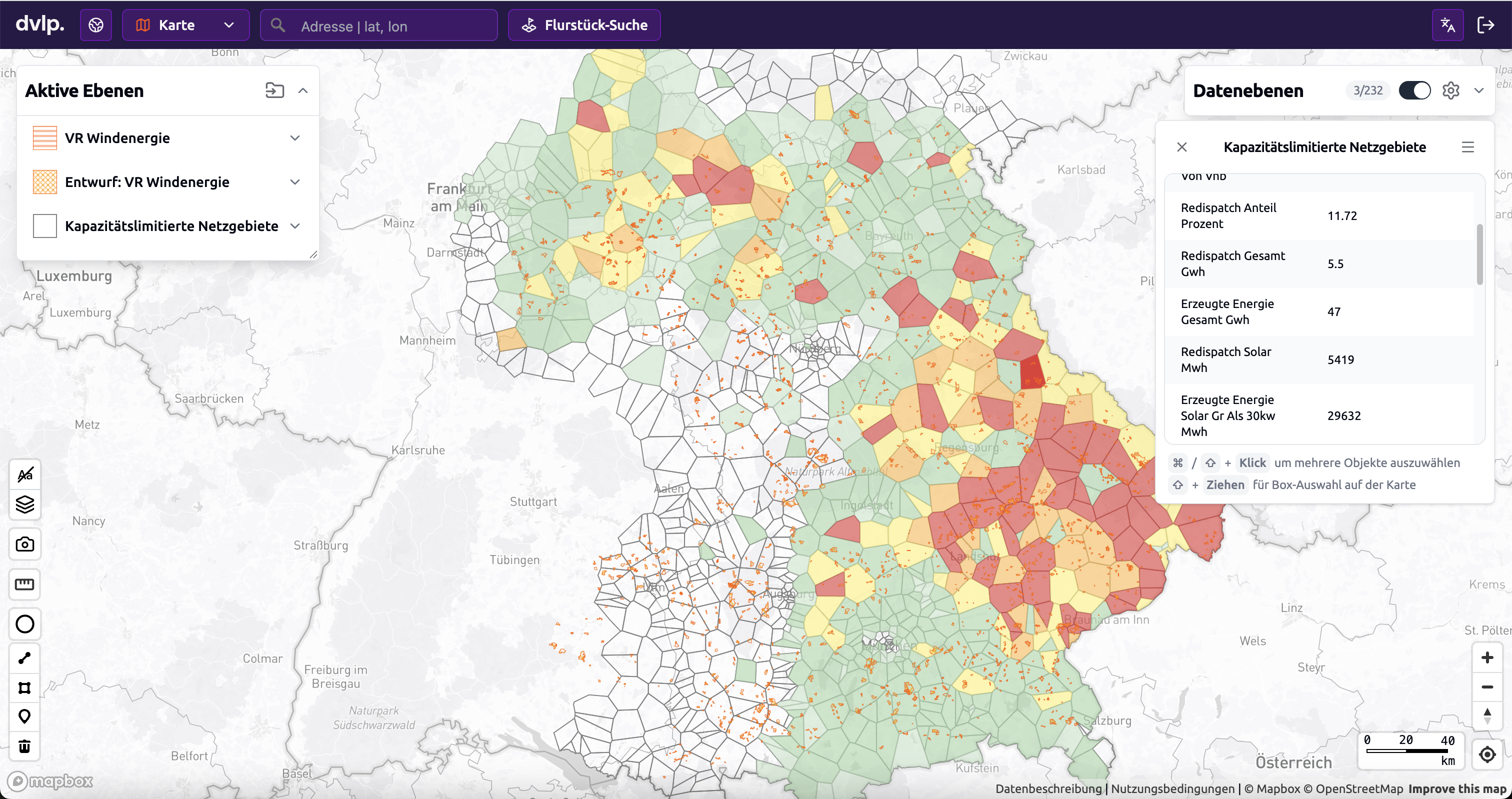
Want to assess grid conditions at your wind project sites early on? Book a demo and discover how to analyse wind priority areas and redispatch data together in dvlp.
More blog posts

%20(1).png)
Request a demo now

